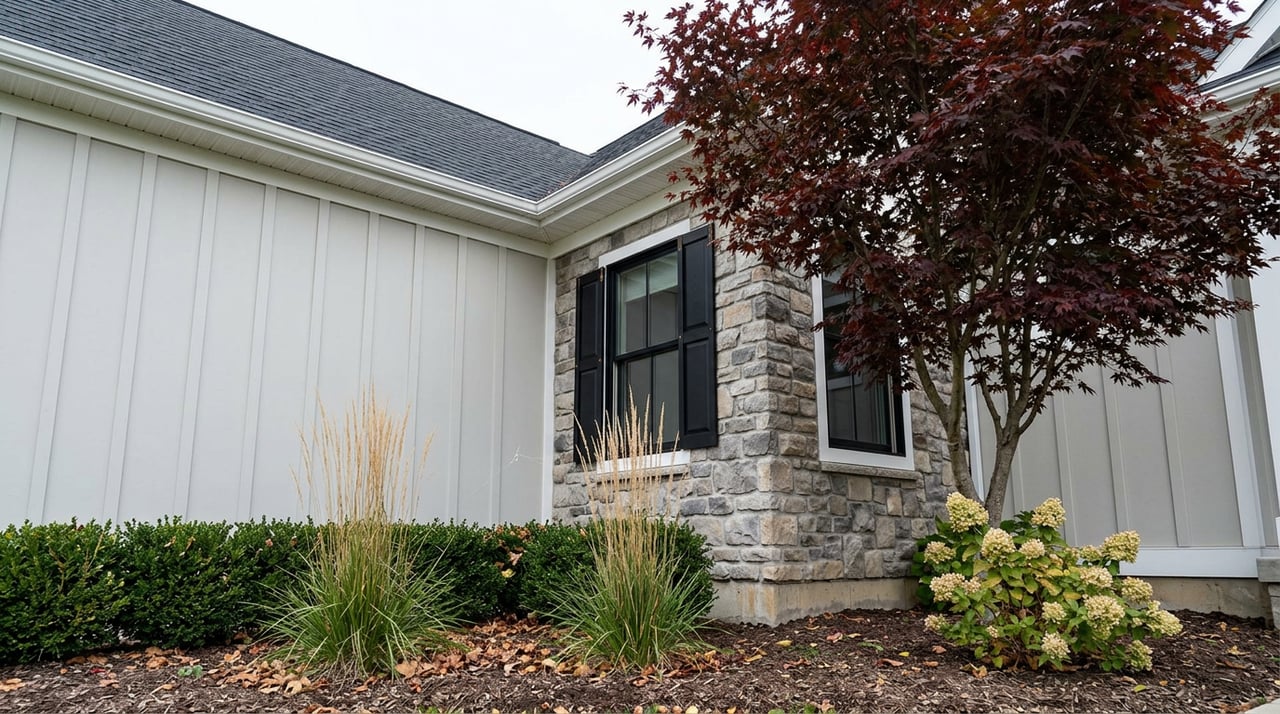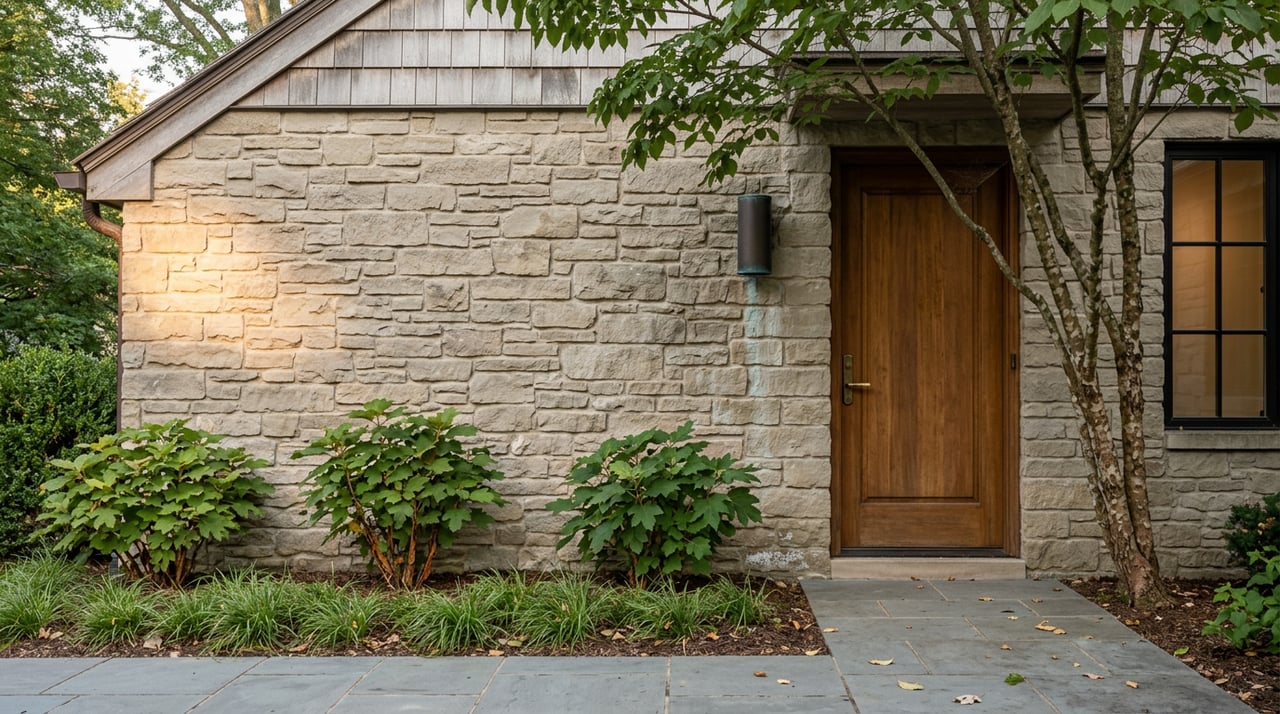
Sit at the bar at Chesapeake Tavern long enough and someone will eventually tell you George Washington slept there. It is one of those stories that gets repeated with total confidence and zero footnotes, and New Jersey Monthly went looking for the paper trail and came up empty. No diary entry, no ledger, nothing. But the surprising part isn't that the Washington story is probably folklore. It's that the building itself doesn't need the exaggeration. The real history of that structure, and of the three restaurants sitting near it on Mill Road, is stranger and better documented than the myth.
Here's the claim worth sitting with: the cluster of restaurants at the intersection of East Mill, West Mill, Schooley's Mountain, and Fairmount Roads isn't a modern dining destination that got built on top of old Long Valley. It's the same commercial corner the town has used for roughly 250 years, just with different tenants. The barns and taverns that fed and sheltered German Valley's farmers in the 1700s and 1800s are the same buildings pouring craft beer and plating crab cakes tonight. If you eat dinner in this part of Washington Township, you are, more often than not, eating inside a structure older than the United States.
A Crossroads That Was Already a Downtown by 1844
Before it was Long Valley, this area was German Valley, settled by German immigrants and renamed during World War I when anti-German sentiment made the original name unwelcome. The four-road intersection that anchors the restaurant scene today was already the commercial heart of the township well over a century before anyone thought to open a brewpub there. By 1844, according to local history research compiled on Hometown History NJ, the township supported twelve stores, a lumber yard, a forge, a tannery, four flour mills, six grist mills, eight sawmills, and four oil mills, almost all of it clustered around this same crossroads. The point isn't the raw count. It's that this intersection has never really stopped being the place where Long Valley does business. The buildings changed jobs. The location didn't.
The Barn That Became a Brewery
The most literal version of that continuity is Long Valley Pub and Brewery, at 1 Fairmount Road. The building started in 1771 as a stone bank barn, built by a German settler with the surname Trimmer to house dairy cows and hay, the stones mortared together with clay, lime, and horsehair. It stayed a working dairy barn for close to two centuries, right up until the 1940s, when regulated milk pricing pushed many local dairy farmers to sell their herds and buy milk from New York and Pennsylvania instead. The barn and its six surrounding acres passed to Jack Borgenicht in 1965 and sat largely unused until 1995, when a renovation converted it into the brewpub that exists today, keeping the hand-hewn timbers and original window openings intact. Steve and Andrea Bussel have owned it since 2010.
What that means if you've had a beer there and never thought twice about the stone walls: you were standing in a building that stood for 224 years before it spent a single day as a restaurant.
The Tavern That Keeps Getting Reborn
Chesapeake Tavern, at 1 West Mill Road, has had more identities than any other building on this corner. It was known as the German Hotel for over a hundred years before becoming the Long Valley Inn. In the early 1980s it housed Chesapeake Bay Seafood Company, a beloved local seafood spot that eventually closed. Keith Holmes, who had worked there as a young manager decades earlier, reopened it in 2012 with the blessing of the original owner, then relaunched it more fully as Chesapeake Tavern in July 2017. In 2024, Rachel Scerbo, who had trained under Holmes at St. Moritz Grill and Bar in Sparta and worked her way up to general manager, purchased the restaurant outright.
The building's most reliably documented brush with history has nothing to do with Washington. According to the same New Jersey Monthly reporting, Albert Einstein was a regular at the Sunday chicken dinners served there in the 1930s. That's a better story anyway, and it happens to be the one with actual sourcing behind it.
When Chesapeake Tavern landed on a 2023 list of the best seafood restaurants in the state, Washington Township's mayor made a point of saying so publicly:
"Please join me in congratulating one of my favorites, Long Valley's Chesapeake Tavern, on being recognized as one of BestofNJ.com's best seafood restaurants." — Mayor Matthew Murello, via Patch
That's not a line from a tourism brochure. It's a local elected official talking about a restaurant the way people here actually talk about it, as a fixture rather than a find.
Two More Buildings Doing the Same Trick
Walk a little further along Mill Road and the pattern holds. La Rienda occupies a building constructed in 1763 by John Peter Neitzer, which later became Neitzer's Tavern under his nephew William. Local lore holds that George Washington stopped in for wine there while conferring with Continental Army officers, a claim that carries the same "rumored" caveat as the Chesapeake Tavern version and should probably be filed in the same folder. What isn't in dispute is the building's age. It predates the brewpub down the street by eight years and the country itself by thirteen.
Red Lantern, the sushi restaurant next door, sits in another of the sturdy stone barns German settlers built for farm use, smaller in footprint than the brewpub but similarly preserved, with wide plank flooring that connects the current dining room to whatever the barn was doing two hundred years ago.
Here's a quick way to see the pattern side by side:
| Restaurant | Building Built | Original Use |
|---|---|---|
| Long Valley Pub and Brewery | 1771 | Dairy barn |
| Chesapeake Tavern | 1780s | German Hotel, later Long Valley Inn |
| La Rienda | 1763 | Neitzer's Tavern |
| Red Lantern | Colonial-era | German settler's stone barn |
Four restaurants, four buildings, and not one of them was purpose-built as a restaurant. Every single one used to be something a farmer needed.
The Branding Is New. The Corner Isn't.
The four properties are often marketed together as "Restaurant Village," a concept Steve Bussel and his wife Andrea Mulleta-Bussel developed after buying the brewpub and an adjacent restaurant in 2009, then acquiring and renovating two more neighboring buildings. It's a smart piece of hospitality branding, and it's also, whether intentionally or not, an honest description of what this corner has always been. Long before anyone called it a village, it was a crossroads with a tannery, a forge, and a dozen stores, where the buildings did whatever job the township needed that decade. Right now the job is dinner.
If you've lived in Long Valley for years and eaten at all four of these places without connecting them, that's the point of this piece. The stone walls at the brewpub aren't decor. The wide plank floors at Red Lantern aren't a design choice. They're what's left of a working farm economy that fed this township for two centuries before it started feeding people crab cakes and craft beer instead. Next time you're waiting on a table at Chesapeake Tavern and someone brings up Washington, you now have a better story to tell them back.
Long Valley's history is one of the things that makes this stretch of Washington Township worth paying attention to, whether you've been here for decades or you're still learning your way around Mill Road. If you're curious about what else makes this corner of Morris County tick, or you're thinking about buying or selling a home here, Connie Manailovich has spent her career getting to know towns like this one building by building. Reach out anytime to talk about what's next.